For decades, there was hardly any other type of building that symbolised growth and economic success as much as the high-rise. Those who grew needed more people. Those who employed more people needed more space. And those who had made it showed it off: with a prestigious address, a large head office, a grand building.
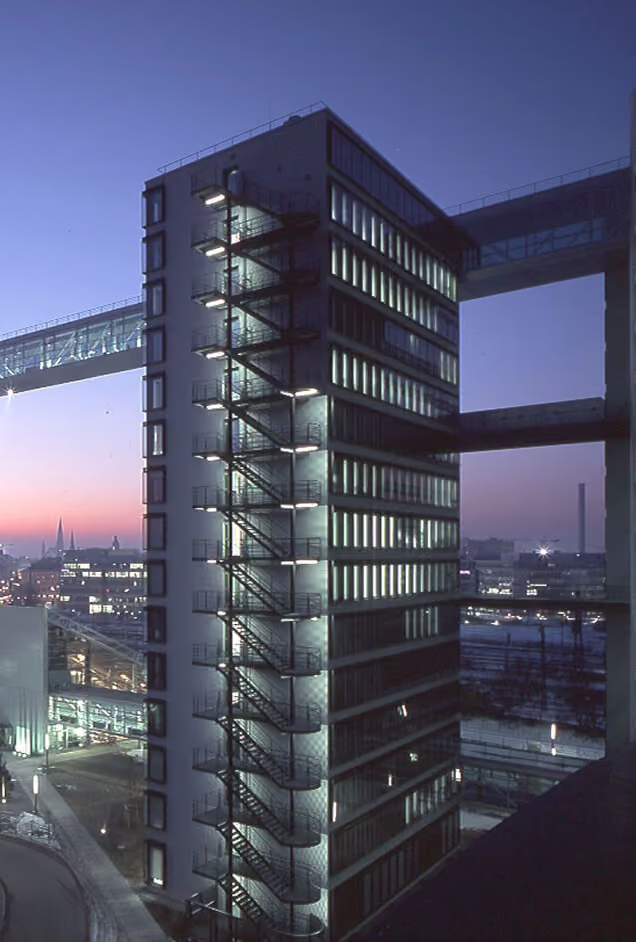
The Ten Towers in Munich are a symbol of this vision of growth. Built in the early 2000s for Deutsche Telekom, the ten towers provided workspace for several thousand people. An entire building complex, tailor-made for a single company. Modern, efficient, prestigious. The future made real.

Twenty years on, that future looks very different.
Today, companies can grow without necessarily becoming physically larger. Digitalisation, automation and artificial intelligence are transforming the relationship between work, people and space. Teams are spread across cities, countries and continents. The office is no longer automatically the place where everyone gathers every morning. And innovation no longer arises solely within a single company, but between companies, people, disciplines and cultures.
The old equations are beginning to break down.
More people = more success.
More space = more growth.
Bigger = better.
Higher = further.
But what is taking their place?
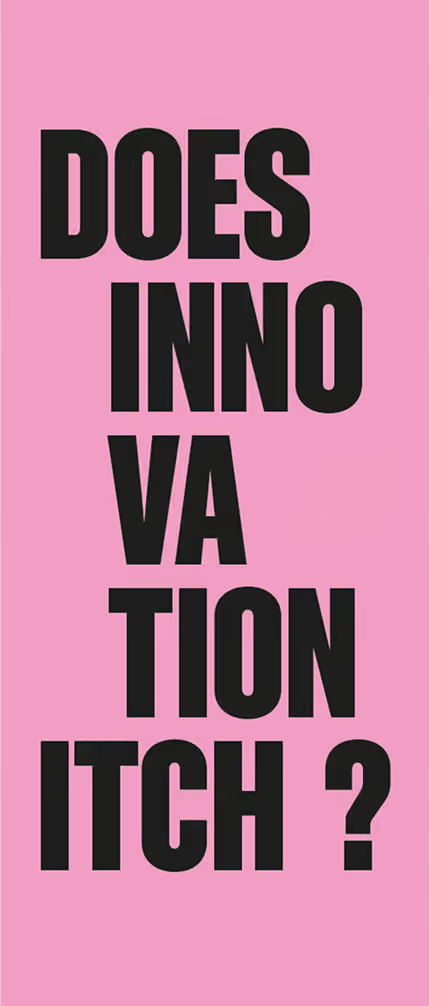
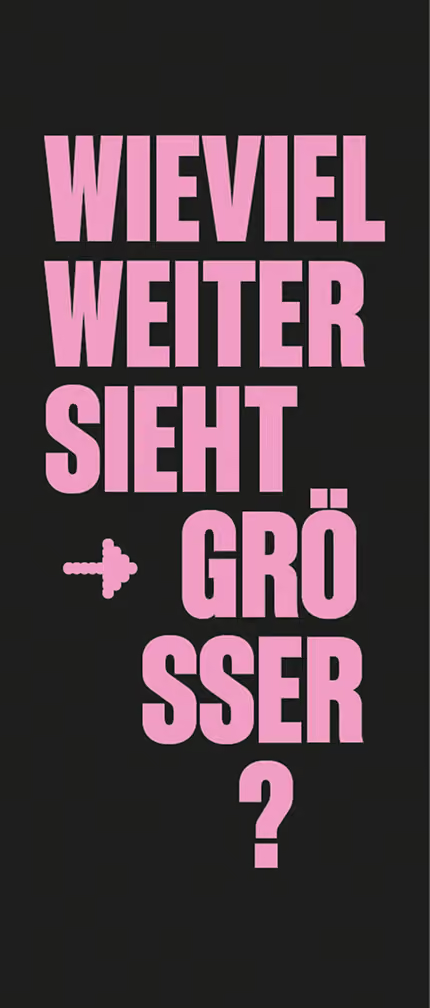
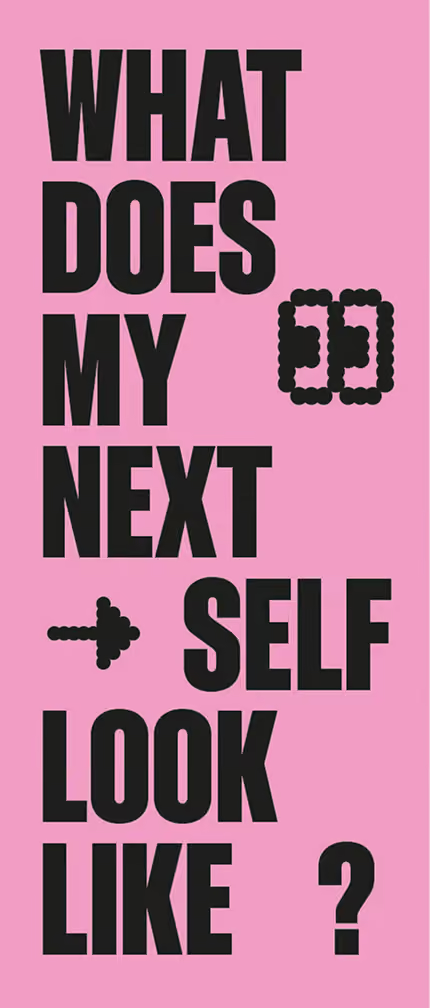
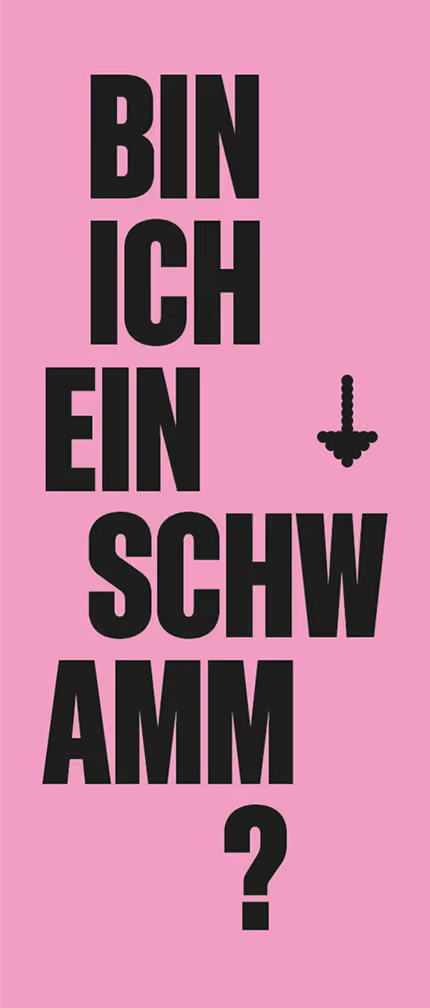
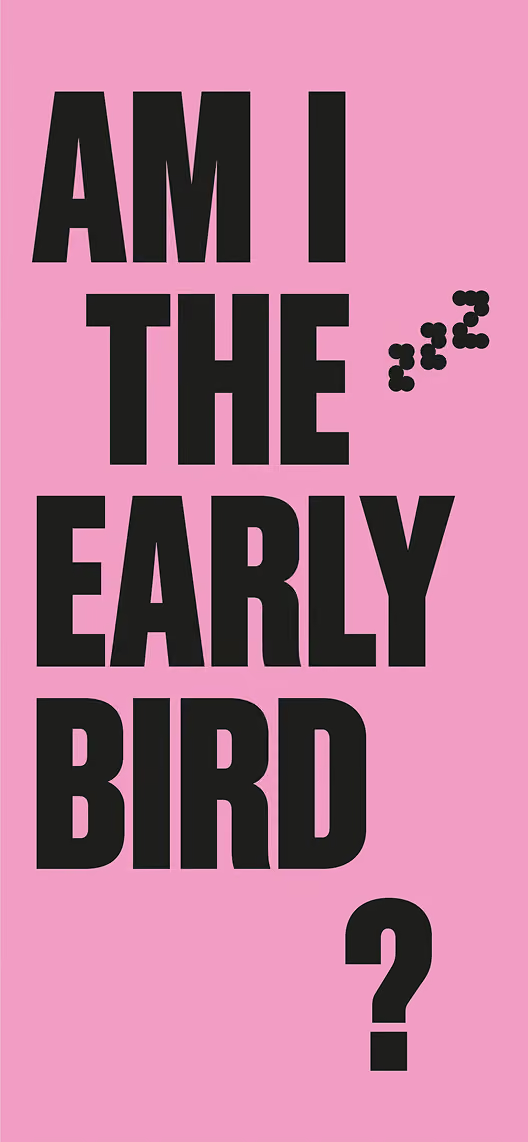
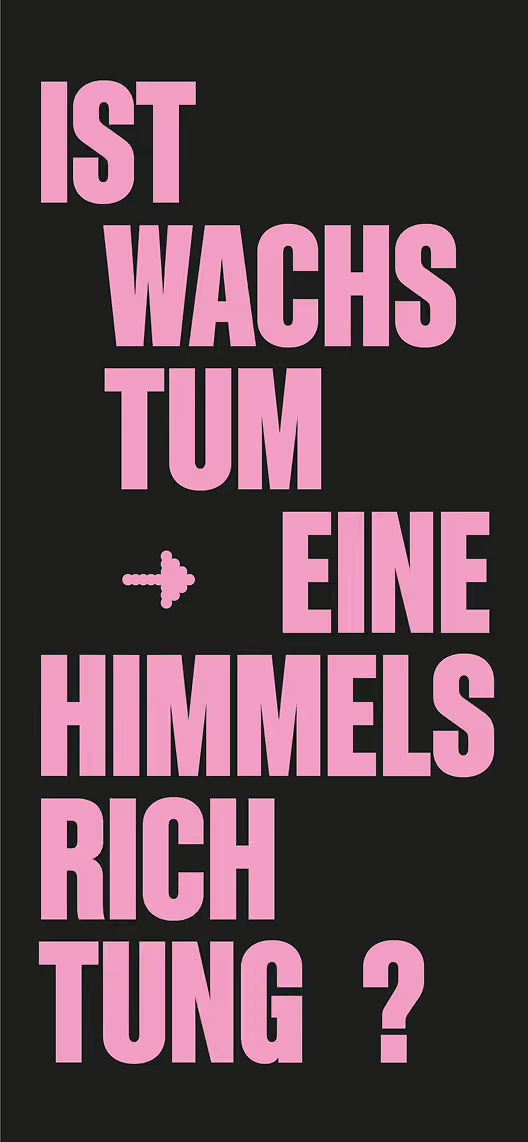
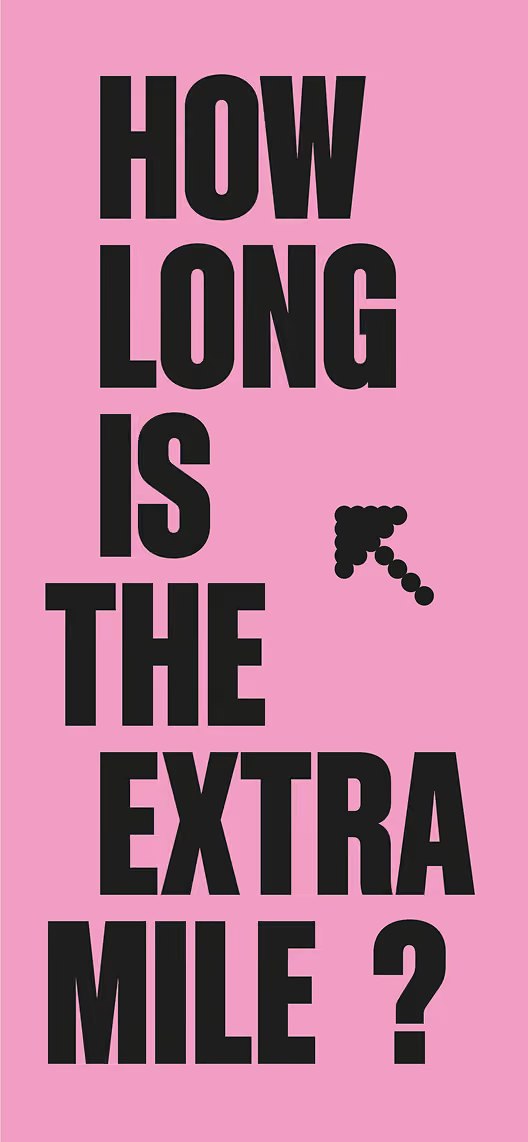
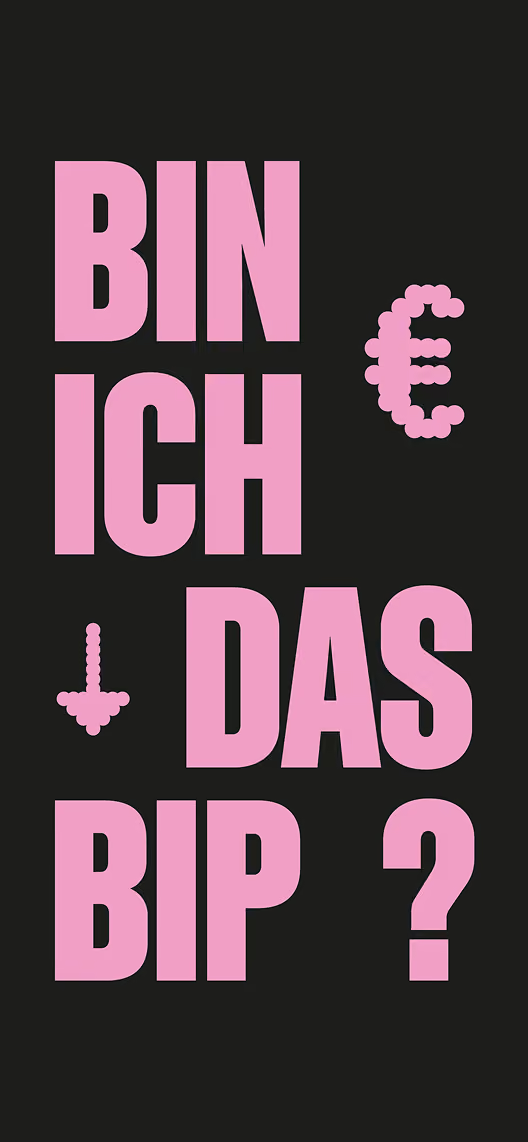

This is exactly where FRAGEN AN DIE ZUKUNFT comes in.
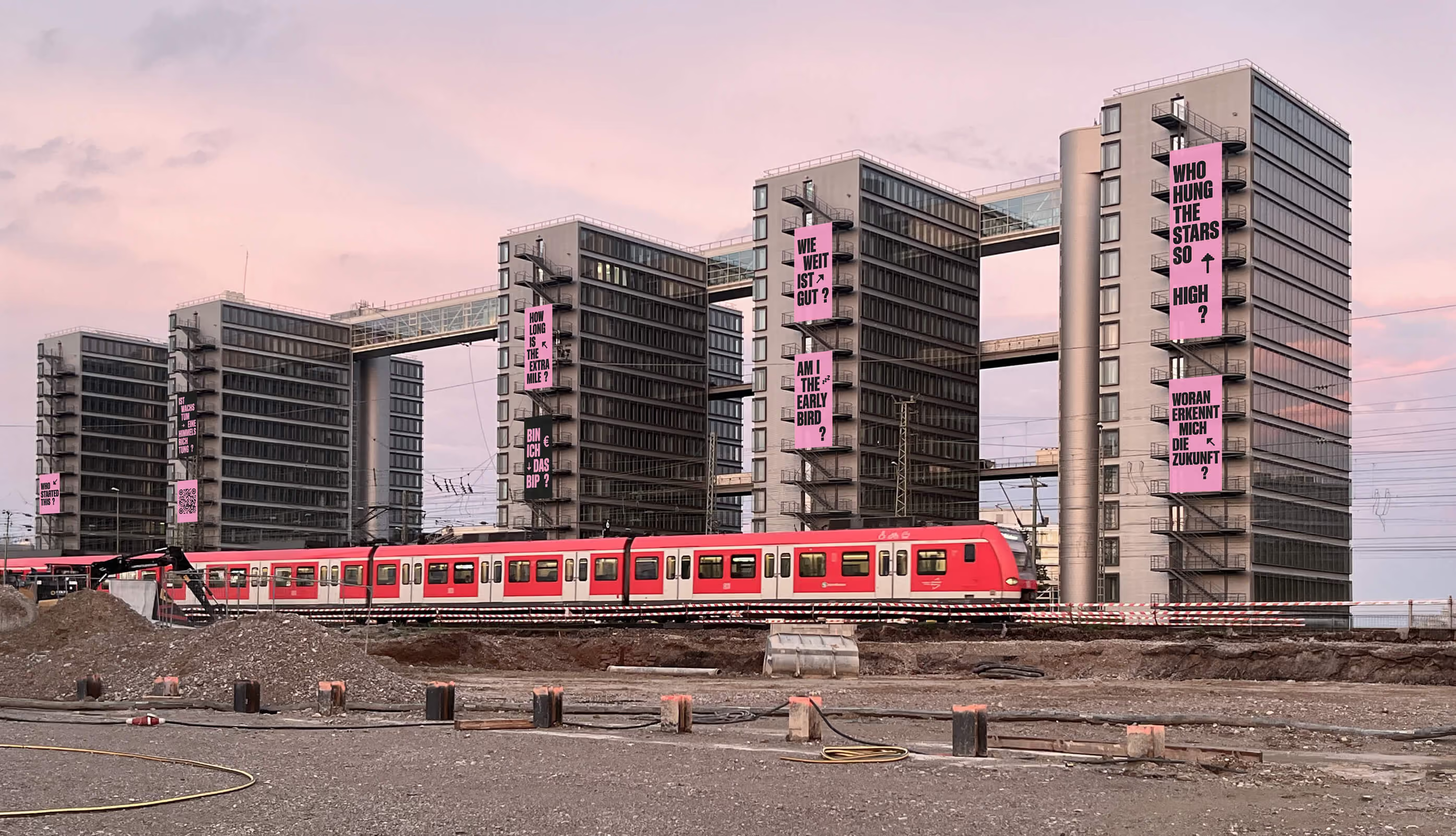
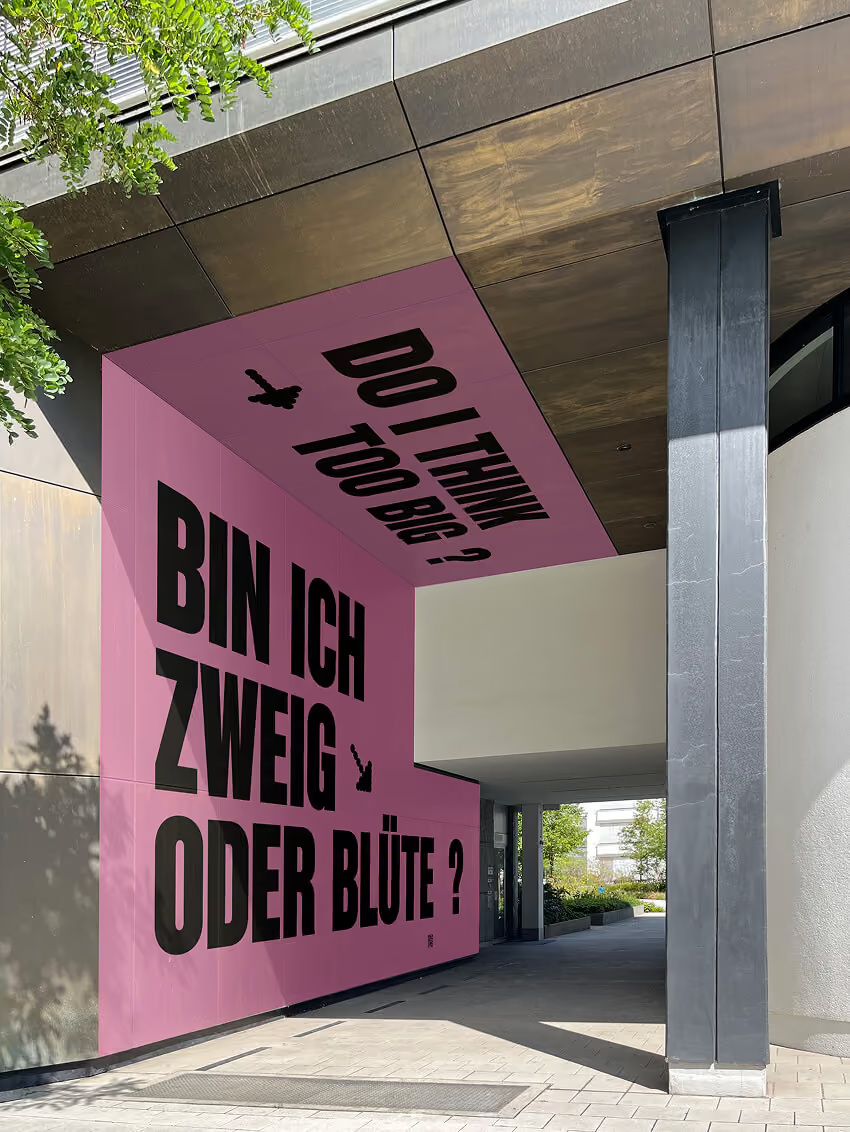
The installation uses the architecture of the Ten Towers and their surroundings as a projection surface to challenge those phrases, promises and beliefs that have shaped our conception of success across generations and in all languages:
Where there’s a will, there’s a way.
The sky is the limit.
Higher, further, faster.
Think big.
The early bird catches the worm.
The only way is up.
These are phrases taken from management literature, advertising, pop culture and everyday life. Motivational mantras that have become almost invisible through constant repetition. They articulate a world view in which standing still means falling behind, boundaries must be overcome, and what has been achieved can only ever be a starting point for the next step.
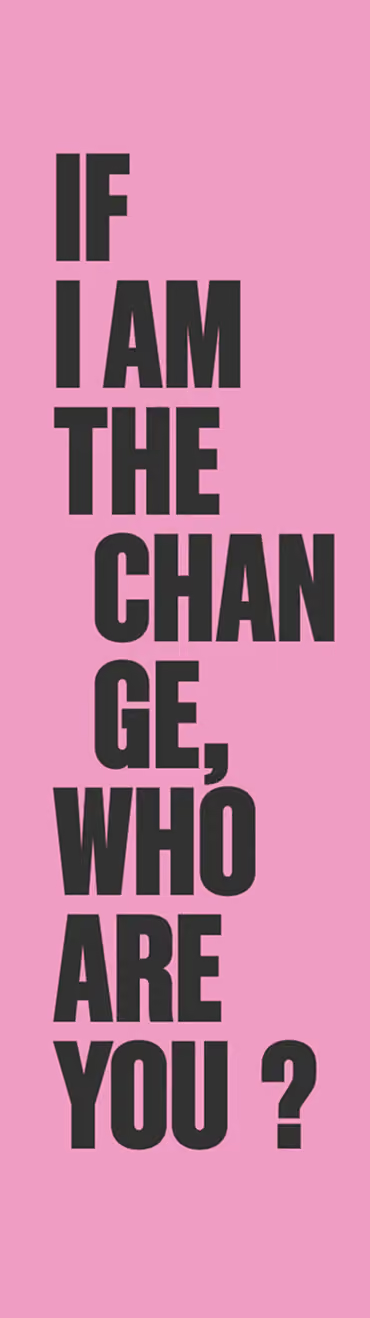
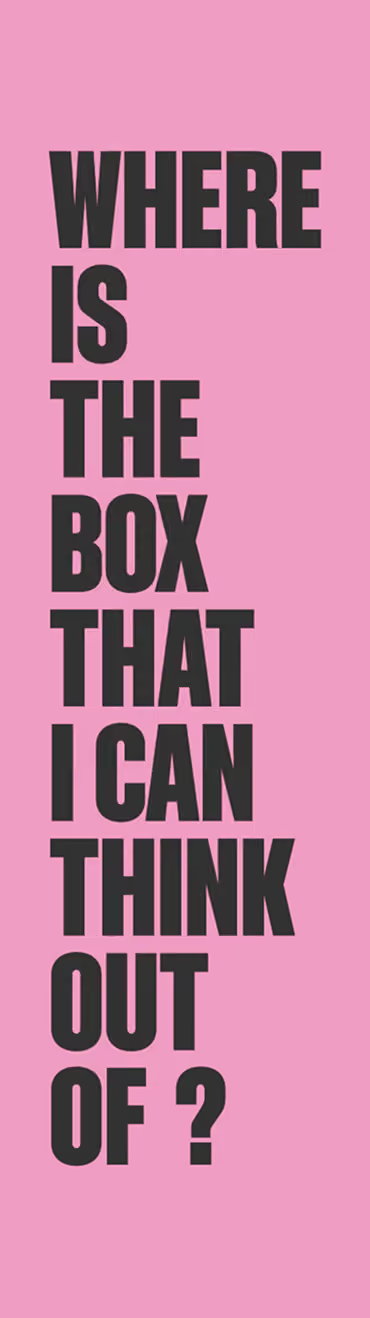
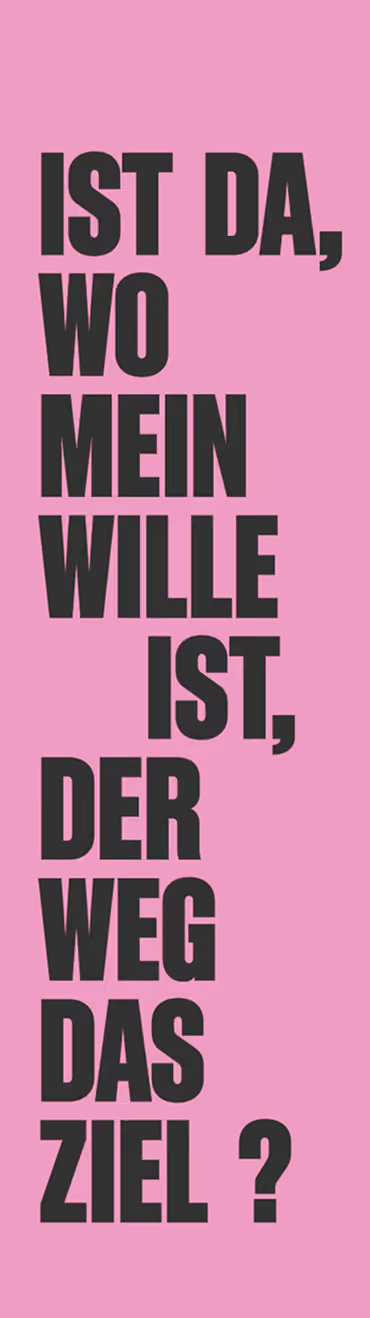
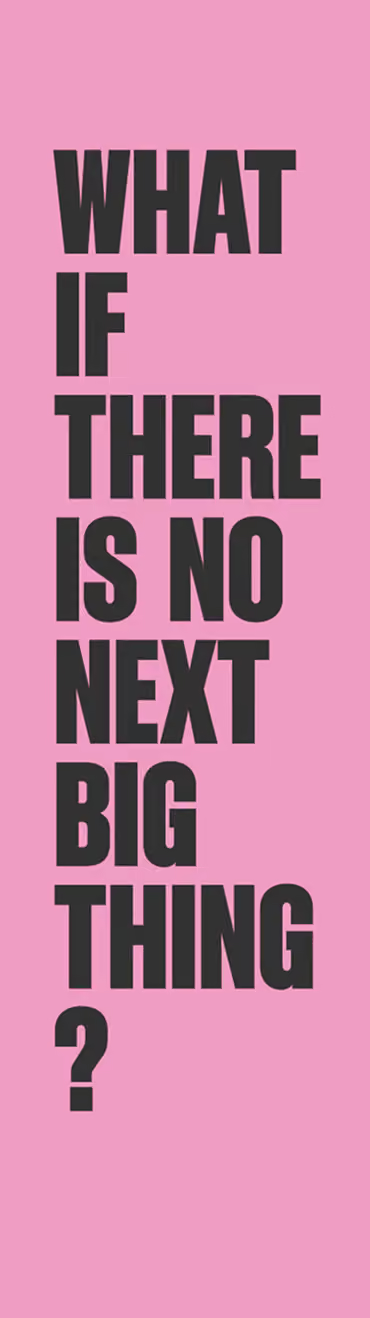
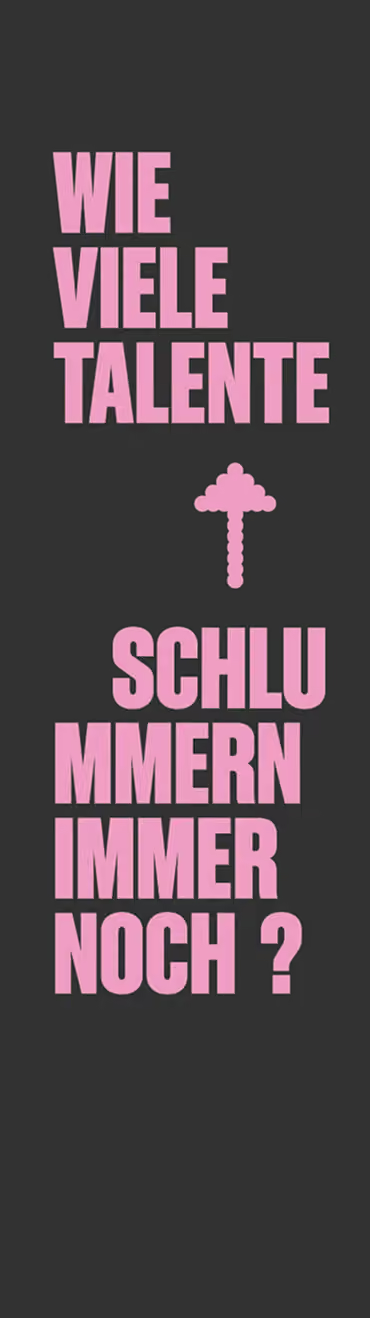
The installation adopts this language, yet alters its function.
The imperative becomes a question.
The assertion becomes doubt.
The promise becomes an open possibility.
And, of all places, the Ten Towers become the site of this questioning. A complex that was once itself the expression of a very concrete vision of the future now asks what the next one might look like.
Perhaps this also holds a different vision of the future.
Not as a linear continuation of the status quo.
Not as an inevitable ‘higher, faster, bigger’.
But as the ability to continually call existing certainties into question.
For the future may not begin where we find the next big answer, but where we start to ask different questions.